
Why Your Commute Matters: Driving Posture and Spinal Health
Your Commute Is Shaping Your Spine
Whether you’re sitting in rush-hour traffic or logging miles as a delivery driver, your car is a second office—and it’s actively influencing your spine health. Hours spent behind the wheel expose your body to poor positioning, repetitive strain, and constant vibration exposure. The good news: small adjustments to your driving setup and awareness of common habits can significantly reduce spinal stress and prevent the neck, mid-back, and lower-back pain that many commuters accept as inevitable.
The Ergonomics of Seat Positioning
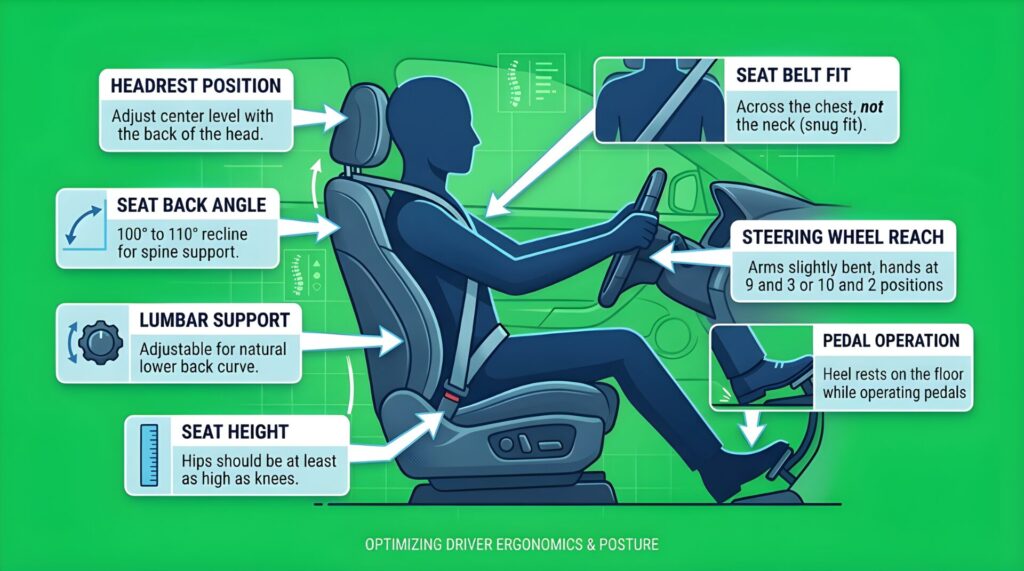
Your seat is the foundation of spinal alignment while driving. Many people slide the seat too close to the steering wheel or recline too far back, both of which force the spine into compromise positions.
- Seat distance: Adjust so your arms are slightly bent when holding the wheel—aim for a 90-120 degree angle at the elbows. Your shoulders should feel relaxed, not stretched or cramped.
- Seat height: Your eyes should align with the middle-to-upper third of the windshield. This keeps your head upright rather than jutting forward, which places excessive load on the cervical spine.
- Lumbar support: Modern cars often have adjustable lumbar curves. Use them. Your lower back needs support to maintain its natural curve during long stretches. If your car doesn’t have lumbar adjustment, a small pillow or memory foam insert behind your lower back can make a real difference.
- Headrest angle: Position it so it supports the middle of your head, not the top. This prevents the forward-head posture that develops when the headrest is too high.
Steering Grip and Upper Body Tension
How you grip the steering wheel affects not just your hands, but your entire upper spine. A white-knuckle grip on the wheel—common in heavy traffic—creates tension in the shoulders, neck, and thoracic spine, leading to fatigue and pain.
Instead, keep your grip light and your hands at the “9 and 3” position (or “10 and 2” if your car’s airbag placement permits). Your shoulders should rest naturally away from your ears. Every few minutes, consciously relax your grip and roll your shoulders back once or twice. This small pause interrupts tension buildup throughout your commute.
Vibration Exposure and Spinal Loading
The constant vibration from the engine, road surface, and suspension doesn’t just feel uncomfortable—it places repetitive microloads on your spine. Delivery drivers and commuters in older vehicles experience more pronounced vibration, which compounds the effect of prolonged sitting.
You can’t eliminate road vibration, but you can reduce its impact by maintaining proper tire pressure (check your owner’s manual), ensuring your vehicle’s suspension is in good condition, and taking breaks every 1-2 hours to step out and move. Movement interrupts the accumulation of vibration stress and allows your discs and joints to reset.
Integrating Chiropractic Care Into Your Commuting Routine
Good driving ergonomics prevent strain, but they don’t address the cumulative wear and postural habits your commute creates. Regular chiropractic care complements your at-the-wheel efforts by identifying early signs of spinal misalignment, relieving tension you may not realize is building, and teaching you corrective movements specific to your driving patterns.
A wellness exam can reveal how your commute is affecting your spine before pain becomes a problem. From there, targeted adjustments and lifestyle guidance ensure your commute supports rather than sabotages your spinal health.
Start Small, Stay Consistent
You don’t need to overhaul your entire driving setup overnight. Begin with seat position, add a lumbar support if needed, and practice shoulder relaxation during red lights. Small, consistent changes compound over weeks and months, resulting in less pain, better posture, and a commute that no longer feels like a threat to your health.
Click here to contact our Office or call Dr. Hogle at (480) 545-7988