Jet Lag
Jet lag is more than just feeling tired across time zones—it’s a cascade of physical stress on your body, and your spine bears much of the load. When your circadian rhythm shifts, your nervous system struggles to maintain normal muscle coordination and postural control. Add hours spent in airplane seats, car rides, and unfamiliar hotel beds, and you have a recipe for misalignment, muscle tension, and pain that can linger long after your trip ends.
The relationship between sleep disruption and spinal health is direct: when you’re sleep-deprived, your core stabilizer muscles weaken, your posture slouches, and your spine carries stress it shouldn’t. Understanding how travel affects your alignment—and what you can do about it—helps you arrive home feeling recovered instead of broken.
Travel Positions That Strain Your Spine
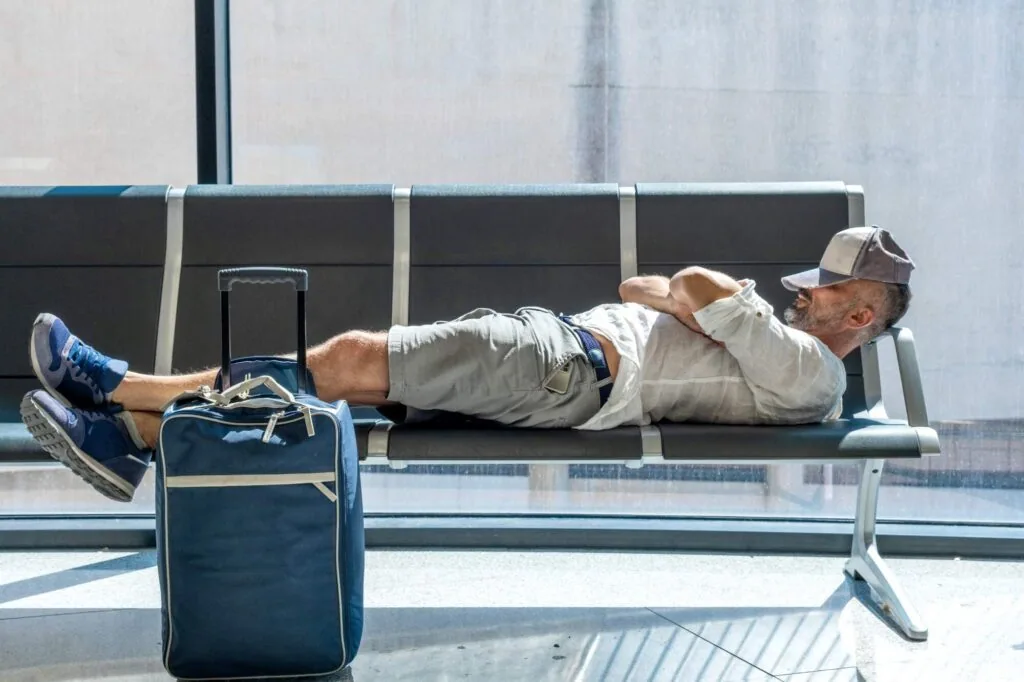
Airplane seats are notoriously poor for spinal health. The shallow recline, lack of lumbar support, and need to fold your legs into a tight space force your spine into a C-curve for hours. Car rides pose similar problems: steering wheels pull your shoulders forward, and long hours in a bucket seat compress your lower back. Even hotel beds—especially those with aging mattresses—offer inconsistent support, leaving your spine unsupported overnight when you need recovery most.
These positions don’t just cause temporary discomfort; they reinforce poor postural habits. By the time you land, your muscles have adapted to slouching, your spine has shifted, and you’re primed for tension and misalignment.
Sleep Loss Worsens Postural Control
Your brain needs consistent, quality sleep to coordinate muscle firing patterns and maintain upright posture. Jet lag fragments your sleep and reduces its depth, leaving your nervous system unable to send clear signals to your stabilizer muscles. The result is compensatory tension: your neck and shoulders tighten, your lower back arches excessively, and secondary muscle groups fatigue trying to hold your frame together.
This postural decay happens fast—often within the first 24 hours of travel—which is why travelers frequently report neck pain, headaches, and lower back soreness before they’ve even unpacked.
Practical Alignment Strategies for Travelers
Before departure: Schedule a wellness exam with Dr. Hogle to establish your baseline spinal alignment. A quick assessment identifies any existing vulnerabilities that travel stress could aggravate, so you can travel with confidence.
During travel: Invest in a cervical travel pillow that maintains the natural curve of your neck during flights and car rides. Stand and walk every 60 to 90 minutes on flights—even a quick aisle walk resets your posture and boosts circulation. If driving, adjust your seat so your hips are level with your knees and your lower back is supported; a small lumbar roll can make a dramatic difference. Avoid crossing your legs or hunching over devices; instead, stretch your hip flexors and chest every few hours.
After landing: Resist the urge to collapse into bed immediately. Light movement—a 15-minute walk, gentle spinal twists, or cat-cow stretches—helps reset your nervous system and signals your body that it’s time to adjust to the new time zone. At your hotel, test the mattress firmness; if it sags, ask for a board to place under it or request a room change.
Upon returning home: Schedule a post-travel alignment check with Dr. Hogle. Even if you feel okay, travel stress can create subtle misalignments that worsen over days or weeks. A quick adjustment and postural assessment ensure you’re not carrying travel strain into your regular routine.
Timing Movement and Sleep
Circadian rhythm recovery isn’t just about sleep schedules—it’s about moving your body at the right times. Morning light exposure and brief exercise bursts help your nervous system reset faster. Avoid heavy meals and prolonged sitting on your first full day at your destination; instead, prioritize gentle movement and natural light to anchor your body clock to the new time zone.
Frequent travelers who build pre- and post-travel wellness exams into their routine report fewer alignment issues, faster recovery, and less chronic pain. Your spine is an investment worth protecting, even—especially—when you’re away from home. Book a pre-travel wellness exam with Dr. Hogle to travel with better posture and arrive home feeling strong. Call us at (480) 545-7988 to schedule your appointment.